
Dental Health · 3 min read
Jaw Pain, Clicking, or Headaches? Signs of a TMJ Problem and When to See a Dentist
November 13, 2026
Written by the Mid-Wilshire Dental Care team
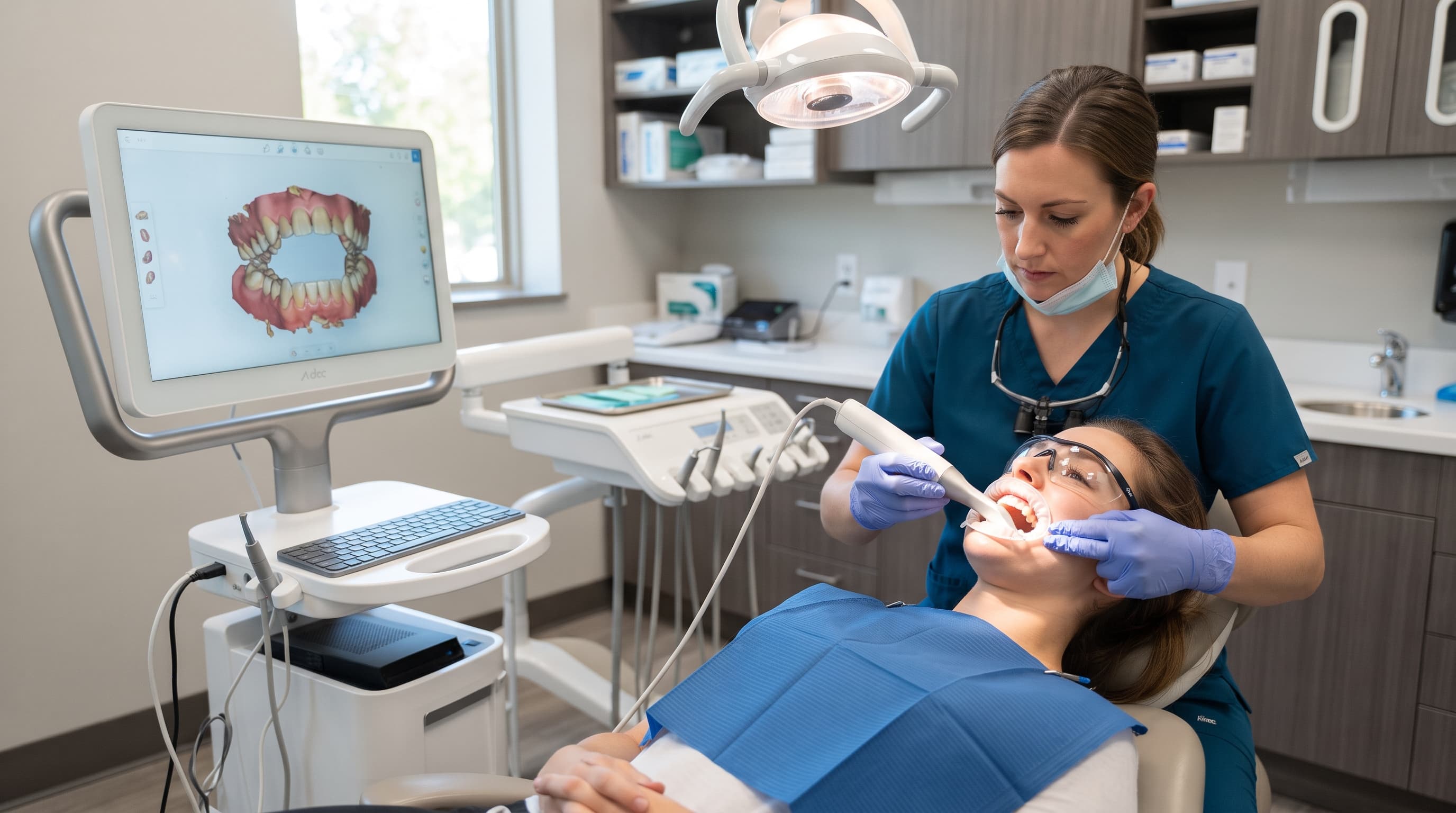
Maybe your jaw clicks every time you yawn. Maybe you wake up with a dull ache near your ear, or your partner says you grind your teeth at night. These are easy to brush off, but they often point to the temporomandibular joints (TMJ) or the chewing muscles around them.
What Is the TMJ?
The temporomandibular joints connect your lower jaw to your skull, just in front of each ear. They let your jaw open, close, and move side to side when you talk and chew. Problems with these joints, or with the muscles that move them, are called temporomandibular disorders.
Signs Worth Paying Attention To
- Pain in the jaw, face, or around the ear, often worse when chewing
- Clicking or popping together with pain, or a jaw that gets stuck open or closed
- Headaches or a sore jaw when you wake up
- Teeth that look worn, flat, or chipped from clenching or grinding
- A feeling that your bite has changed
A jaw that clicks without pain, and opens and closes normally, generally does not need treatment.
What Causes Jaw Pain?
There is often more than one cause. Common ones include clenching or grinding your teeth (often at night), stress, an injury to the jaw, arthritis in the joint, and habits such as chewing gum constantly or biting nails. Some facial pain is not dental at all: sinus problems, ear infections, and certain headaches can feel like jaw pain, which is why an exam matters.
What You Can Try at Home
- Eat softer foods for a while and avoid chewing gum.
- Avoid very wide yawning and opening.
- Apply warm or cold compresses to the sore area.
- Notice daytime clenching, and let your teeth rest apart with your lips closed.
If the pain is severe, keeps coming back, or your jaw locks, have it checked.
How a Dentist Evaluates Jaw Pain
At our office we ask when the pain started, what makes it worse, and whether you clench or grind. We then check how far and how smoothly your jaw opens, feel the joints and chewing muscles, and look at your bite and your teeth for wear. If the cause looks non-dental, we tell you whether a physician or physical therapist should be involved.
Conservative Care Comes First
Most TMJ problems improve with simple, reversible care. Depending on your exam, that can include a custom night guard to protect your teeth and ease the load on your jaw while you sleep, along with the home measures above. Read more about TMJ and jaw pain treatment at Mid-Wilshire Dental Care.
Grinding can also be linked to sleep problems. If you snore loudly or wake up unrefreshed, ask us about sleep apnea as well.
Book a Jaw Evaluation
If the pain has lasted more than a couple of weeks, keeps coming back, or your jaw has locked even once, it is time for an exam. Our office is at 6200 Wilshire Blvd, Suite 1508, and welcomes patients from across Los Angeles, including Beverly Hills and West Hollywood. Mention jaw pain when you book online or call (310) 731-6119, so we leave enough time to look at it properly.
Jaw pain has many possible causes, some of them not dental. Use this as a starting point, not a diagnosis.