
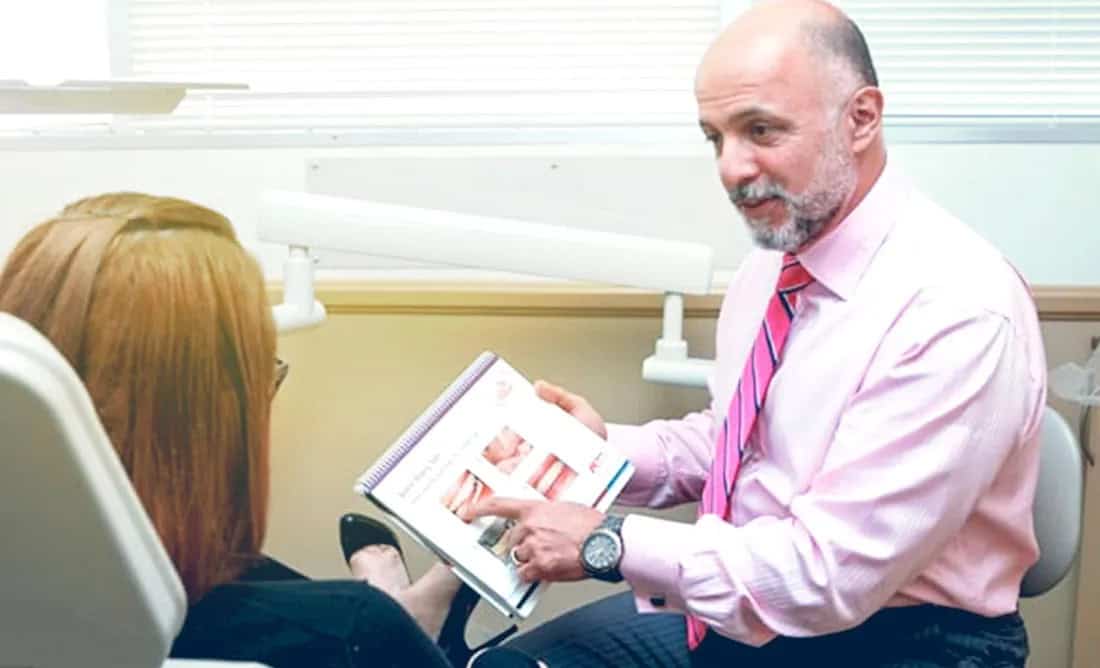
Dentures in Los Angeles, CA
Full, partial, and implant-supported dentures in Los Angeles. Get an exam of your gums and bone, then compare options. Call (310) 731-6119 to book.
Dentures at Mid-Wilshire Dental Care
Medically reviewed by Dr. Bijan Afar, DDS, MS — Periodontist & Oral Implantologist
Dentures are removable replacements for missing teeth. Modern dentures are made to fit the contours of your gums, restore your ability to chew and speak comfortably, and look natural in your smile.
If you are missing some or all of your teeth, or an existing denture has become loose or uncomfortable, an exam is the first step. We look at the health of your gums and jawbone, your bite, and your goals before recommending an option.
Types of Dentures
The right type depends on how many teeth are missing and on the condition of your gums and bone.
- Complete (full) dentures replace all of the teeth in the upper or lower arch and rest on the gums.
- Partial dentures replace several missing teeth and attach to your remaining natural teeth, so the teeth you still have are kept in place.
- Implant-supported dentures snap onto dental implants placed in the jaw, which can make a denture more stable than one that rests on the gums alone.
Signs You May Need Dentures
- Several or all of your teeth are missing, or are too damaged or loose to be repaired.
- You have trouble chewing or avoid certain foods because of missing teeth.
- An existing denture slips, clicks, rubs, or no longer fits the way it used to.
- Advanced gum disease or decay has made it hard to keep your remaining teeth healthy.
Only an examination can tell whether dentures, implants, or another option is right for you.
Missing Teeth: Dentures, Bridges, or Implants?
Dentures are one of several ways to replace missing teeth. Dental implants support a replacement tooth or denture from within the jawbone, and bone preservation after an extraction can keep that option open. Which approach fits depends on your bone and gum health, how many teeth are missing, your health history, and your budget.
Dr. Afar is a periodontist and implant dentist, so gum and bone health, which decide how well any replacement will fit, are part of every evaluation. If you are missing one or more teeth and are not sure where to start, a consultation can lay out the options side by side.
Getting Used to New Dentures
Most people need a few weeks to adjust. Your cheeks, lips, and tongue learn how to hold the denture, and eating and speaking can feel different at first. Minor sore spots are common and are usually corrected with small adjustments, so please call us instead of trying to fix a denture at home.
- Start with soft foods cut into small pieces and chew on both sides of your mouth.
- Clean dentures daily with a denture cleaner or mild soap, not regular toothpaste, which can scratch the surface.
- Follow your dentist's guidance on when to remove dentures, such as overnight.
- Keep your regular checkups. Gums and jawbone change over time, and a denture may eventually need to be relined or replaced.
Related Care You May Be Looking For
- Dental implants for missing teethCompare implant-supported replacement with dentures.
- All-on-4 full-arch implantsA fixed option for replacing a full arch of teeth.
- Bone grafting before implantsRebuilding jaw volume when bone has been lost.
- Tooth extractionWhen teeth cannot be saved, and how we protect the bone.
This page is for general education and is not a diagnosis or a substitute for a dental examination. Recommendations depend on your individual health, and results vary from patient to patient.
What's Included
- Exam of your gums, bone, and bite before any recommendation
- Full, partial, and implant-supported denture options
- Impressions and a try-in so you can review fit and appearance
- Adjustments after delivery, and follow-up visits as your mouth changes
What to Expect
- 1
Exam & planning
We review your health history, take digital images, and examine your teeth, gums, and bone to talk through your options.
- 2
Impressions & bite records
Precise impressions and measurements are taken so the denture fits your mouth and your bite.
- 3
Try-in
You preview the shape, shade, and fit of the teeth before the denture is finished, and we make changes if needed.
- 4
Delivery & follow-up
We place your denture, teach you how to care for it, and schedule adjustment visits for comfort.
Frequently Asked Questions
How long does it take to get used to dentures?
Will dentures look natural?
How long do dentures last?
What is the difference between dentures and dental implants?
Can I eat normally with dentures?
Ready to Get Started?
Schedule a consultation for dentures today. We'll answer your questions and help you decide what's right for your smile, no pressure.
Related Services
All-on-4 Implants
Full-arch tooth replacement in one day with All-on-4 in Los Angeles. Placed by periodontist Dr. Bijan Afar, DDS, MS. CareCredit financing available.
Dental Implants
Implants placed by a periodontist and oral implantologist with 30+ years in Los Angeles. Single-tooth through full-arch, with sedation and financing available.
Dental Fillings
Tooth-colored dental fillings for cavities and tooth decay in Los Angeles. Exam, digital X-rays, and gentle care. Call (310) 731-6119 to book a visit.
Root Canal
Root canal treatment in Los Angeles for infected teeth and severe toothache. Learn the signs, what to expect, and recovery. Call (310) 731-6119.