
Cosmetic Dentistry & Orthodontics
Straighten Your Teeth With Invisalign in Los Angeles
Invisalign clear aligners for teens and adults at our Wilshire Blvd office in the Wilshire District, Los Angeles. Request your Invisalign consultation today.
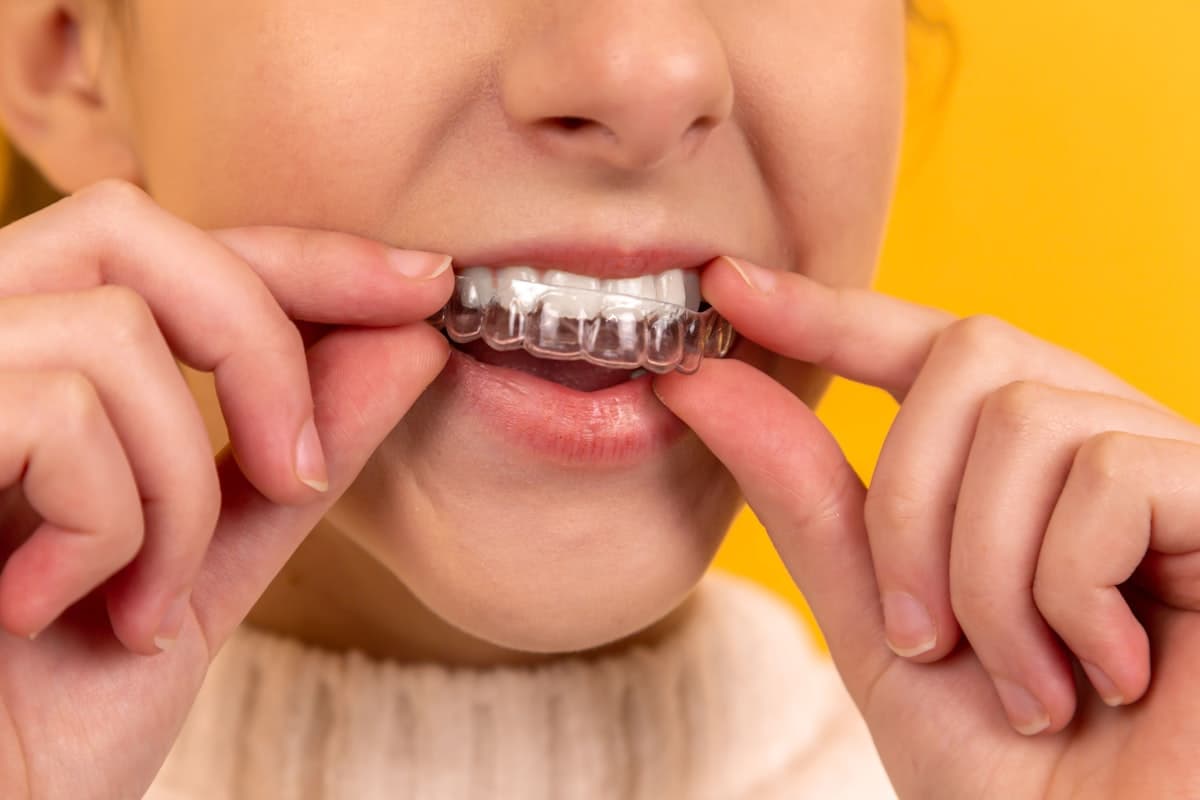
How Invisalign Clear Aligners Work
Invisalign straightens teeth with a series of clear, removable aligners. Each set is made for your teeth and moves them a small step; every week or two you switch to the next set, until your teeth reach the position planned at the start.
Because the aligners come out, you can eat what you like and brush and floss normally. The trade-off is discipline: they only work when they are worn about 20 to 22 hours a day.
Invisalign treatment at our office is provided by Dr. Bijan Afar or a member of our team, at 6200 Wilshire Blvd, Suite 1508, for patients from Mid-Wilshire, the Wilshire District, and across Los Angeles.
What's Included
- Clear, removable aligners instead of brackets and wires
- A custom treatment plan mapped tooth by tooth
- Eat normally and brush and floss as usual
- Regular check-ins to track progress
- Retainers to keep the result afterward
Who Invisalign Treatment Suits
Invisalign can treat many of the same problems as braces, in teens and adults:
- Crowded or overlapping teeth
- Gaps between teeth
- Many cases of overbite, underbite, crossbite, and open bite
- Teeth that have shifted since braces years ago
Complex bite or jaw problems may be better treated with braces, and some cannot be corrected with aligners alone. Aligners also ask for consistency: if you know you will not wear them 20 to 22 hours a day, braces may serve you better. We tell you which applies after an exam.
Healthy Gums First
Straight teeth only last on healthy gums and bone. Moving teeth through inflamed gums or weakened bone can make gum disease worse, so it needs to be under control before aligner treatment starts. Our practice is led by a periodontist, Dr. Bijan Afar, so if your gums need care first, that happens in the same office.
Invisalign vs. Braces and Other Options
We offer both, so the choice comes down to your teeth and your habits rather than to what is available. Metal braces are fixed to the teeth: they work around the clock without you having to remember anything, and they handle a wide range of tooth movements. Invisalign aligners are clear and removable, which makes them harder to notice and easier to live with at meals, but they only move teeth while you are wearing them.
Day to day, aligners mean no brackets or wires to catch food or rub your cheeks, and you brush and floss as usual. Braces mean fewer decisions, but more care around the brackets when you clean. For some larger bite corrections, braces may be the more predictable option.
If what bothers you is only the look of a few front teeth, cosmetic treatment such as bonding or veneers is sometimes an alternative to straightening, although it does not change how your teeth bite together.
Wearing Invisalign Day to Day
- To put an aligner in, line it up over your front teeth and press it into place with your fingertips, then press over the back teeth. Do not bite it into place.
- To take it out, start at the back teeth on one side, ease it off with a fingertip, and work around to the other side.
- Take the aligners out to eat and to drink anything other than water.
- Brush your teeth before putting them back in, so food is not trapped against the teeth.
- Clean the aligners with a soft brush and cool or lukewarm water, since hot water can warp them, and keep them in their case when they are out.
- Expect a day or two of pressure with each new set.
What Invisalign Costs
The cost of Invisalign treatment depends on how much your teeth need to move, how long treatment takes, whether refinement aligners are needed, and the retainer afterwards. Because every case is different, the cost is explained after your exam and plan rather than quoted in advance.
Some dental plans include orthodontic benefits, and we check yours before treatment. For the remaining balance, third-party financing is available through CareCredit, Patient Preferred, and Sunbit.
After Invisalign Treatment: Retainers
Teeth tend to drift back after any orthodontic treatment. A retainer, worn as directed, keeps the result. Plan on wearing one for the long term, at least at night.
Retainers are often clear and can look a lot like aligners, which is why people sometimes ask whether Invisalign is a retainer. It is not: aligners move the teeth, and a retainer holds them where they ended up.
Related Care You May Be Looking For
This page is for general education and is not a diagnosis or a substitute for a dental examination. Recommendations depend on your individual health, and results vary from patient to patient.
What to Expect
- 1
Exam and consultation
We check your teeth, gums, and bite, take X-rays if they are due, and talk about what you want to change. Cavities and gum problems are treated before any teeth are moved.
- 2
Scan and custom plan
Impressions or a digital scan record your teeth. Your Invisalign treatment is then planned tooth by tooth, mapping how each tooth is expected to move and roughly how long it will take.
- 3
Your Invisalign aligners
You receive a series of custom aligners and switch sets as directed, usually every week or two. Small tooth-colored bumps called attachments may be bonded to some teeth to help the aligners grip.
- 4
Check-ins and retainers
Regular visits let us check that your teeth are following the plan; some cases need a few extra refinement aligners. At the end, a retainer keeps the result.
Frequently Asked Questions
How long does Invisalign take?
It depends on how much the teeth need to move. Simple cases can take several months and more complex ones longer; your plan includes an estimate.
Does Invisalign hurt?
You may feel pressure for the first day or two of each new set as the teeth start to move. It usually fades quickly.
How much does Invisalign cost in Los Angeles?
It depends mostly on how complex your case is and how long treatment will take. We check whether your plan includes orthodontic benefits, explain the cost after your exam, and offer third-party financing through CareCredit, Patient Preferred, and Sunbit.
How many hours a day do I have to wear the aligners?
About 20 to 22 hours a day. Take them out only to eat, drink anything besides water, and clean your teeth.
How do I put Invisalign aligners in?
Line the aligner up over your front teeth and press it into place with your fingertips, then press gently over the back teeth until it sits fully. Do not bite it into place, because that can damage the aligner.
What is Invisalign made of?
Invisalign aligners are made of SmartTrack, a flexible thermoplastic material developed by Align Technology, the company that makes Invisalign. Each aligner is shaped to fit your teeth at that stage of treatment.
Can Invisalign fix an overbite or underbite?
Many bite problems can be improved with aligners, but more complex cases may need braces or other treatment. An exam shows which applies to you.
Can I get Invisalign if I have gum disease?
Gum disease needs to be treated and under control first, because moving teeth through inflamed gums or weakened bone can make it worse. Our practice is led by a periodontist, so the gums can be treated in the same office before aligner treatment starts.
Ready to Get Started?
Schedule a consultation for invisalign and we will walk you through the options, the timing, and the next step for your case.