
Gum Disease Treatment in Los Angeles, CA
Bleeding or swollen gums? Periodontist-led gum disease treatment in Mid-Wilshire, from deep cleaning to surgical care. Call (310) 731-6119 to book.
Gum Disease Treatment in Los Angeles
Medically reviewed by Dr. Bijan Afar, DDS, MS — Periodontist & Oral Implantologist
Gum disease is the number-one cause of tooth loss in adults, and most people don't know they have it until a dentist tells them. Bleeding when you brush, chronic bad breath, or gums that look like they're pulling away from your teeth — those are the early warnings, and they don't get better on their own.
The good news is that in its earliest stage — gingivitis — gum disease is fully reversible. In the more advanced stage — periodontitis — it can be halted and stabilized, though bone that's already been lost doesn't grow back on its own. What matters is catching it and treating it before the destruction becomes structural.
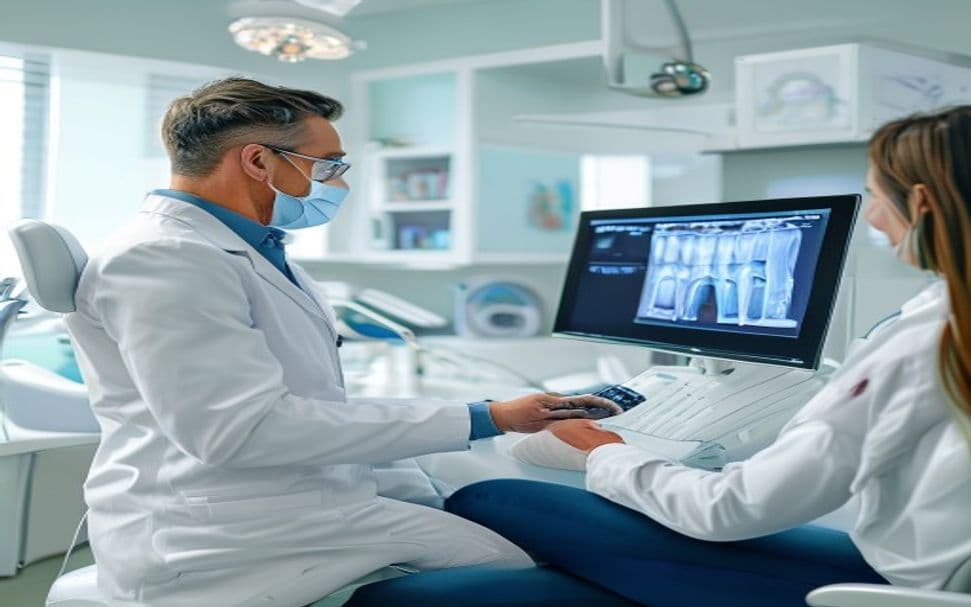
At Mid-Wilshire we treat every stage, from a first cleaning with a gingivitis warning through full-mouth periodontal reconstruction. The standard path starts with a periodontal exam and X-rays, moves to scaling and root planing (a deep cleaning below the gum line to clear bacterial biofilm off the roots), then to a periodontal maintenance schedule to keep it from coming back. In more advanced cases we add locally-delivered antibiotics, host-modulation therapy, and — where the disease has already destroyed supporting tissue — surgical periodontal therapy.
Dr. Afar is a periodontist and has been doing this work for 30 years. He's not going to refer you out for the treatment; you get the specialist in the chair from the first visit.
Bleeding Gums: What They Can Mean
Healthy gums do not normally bleed. Bleeding when you brush or floss is most often a sign of gum inflammation caused by plaque, which is the earliest stage of gum disease (gingivitis). Other possible contributors include brushing too hard, starting a new flossing habit, certain medications such as blood thinners, hormonal changes such as pregnancy, and some medical conditions.
Bleeding gums are a symptom, not a diagnosis. If your gums bleed regularly, a periodontal exam, which measures the pockets around each tooth and checks the bone on X-rays, can tell us whether gum disease is the cause.
Do not stop brushing and flossing because your gums bleed. Gentle, consistent cleaning is part of how inflamed gums heal.
Warning Signs of Gum Disease
- Gums that bleed when you brush or floss
- Red, swollen, or tender gums
- Persistent bad breath or a bad taste
- Gums pulling away from the teeth, so the teeth look longer
- Loose teeth or a change in how your teeth fit together
Related Care You May Be Looking For
- Gingivitis: the earliest stage of gum diseaseReversible with professional care and good home hygiene.
- Gum grafting for receding gumsRestoring gum tissue that has pulled back.
- Periodontist in Los AngelesSpecialist care for gums and the bone that supports teeth.
- Dental cleanings and examsRegular visits help catch gum problems early.
This page is for general education and is not a diagnosis or a substitute for a dental examination. Recommendations depend on your individual health, and results vary from patient to patient.
What's Included
- Full periodontal exam with probing depths and digital X-rays
- Scaling and root planing (deep cleaning below the gum line)
- Localized antibiotic therapy (Arestin) where indicated
- Periodontal maintenance every 3–4 months post-treatment
- Surgical periodontal therapy for advanced cases
- Screening for the link between gum disease and diabetes, heart disease, and pregnancy risk
What to Expect
- 1
Consultation
We'll discuss your concerns, review your medical history, take digital images, and explain every option in plain language, no pressure, no surprises.
- 2
Personalized plan
Dr. Bijan creates a tailored treatment plan with clear pricing and timing. You decide what's right for you.
- 3
Gentle treatment
Our team delivers your treatment with care, using sedation when helpful and explaining each step along the way.
- 4
Ongoing care
We follow up to make sure you're healing well and provide guidance to keep your smile healthy for years.
Thanks to Dr. Afar, my periodontal health has significantly improved.
Frequently Asked Questions
How do I know if I have gum disease?
What is scaling and root planing?
Is scaling and root planing painful?
How much does gum disease treatment cost?
How often do I need to come back after treatment?
Ready to Get Started?
Schedule a consultation for gum disease today. We'll answer your questions and help you decide what's right for your smile, no pressure.
Related Services
Periodontist
Periodontist Dr. Bijan Afar, DDS, MS — 30+ years on Wilshire Blvd placing dental implants, treating gum disease, and rebuilding smiles in Los Angeles.
Gum Grafting
Fix receding gums and cover exposed roots with soft-tissue grafting from a Los Angeles periodontist. Connective-tissue and pinhole techniques.
Bone Grafting
Rebuild jawbone volume for future dental implants with in-office bone grafting in Mid-Wilshire. Socket preservation, ridge augmentation, sinus lifts.
Invisalign
Clear aligner treatment for teens and adults in Mid-Wilshire. Fewer visits, removable trays, and financing options. Request your Invisalign consultation today.