
Dental Health · 3 min read
Receding Gums: Causes, Warning Signs, and When a Gum Graft Helps
November 13, 2026
Written by the Mid-Wilshire Dental Care team
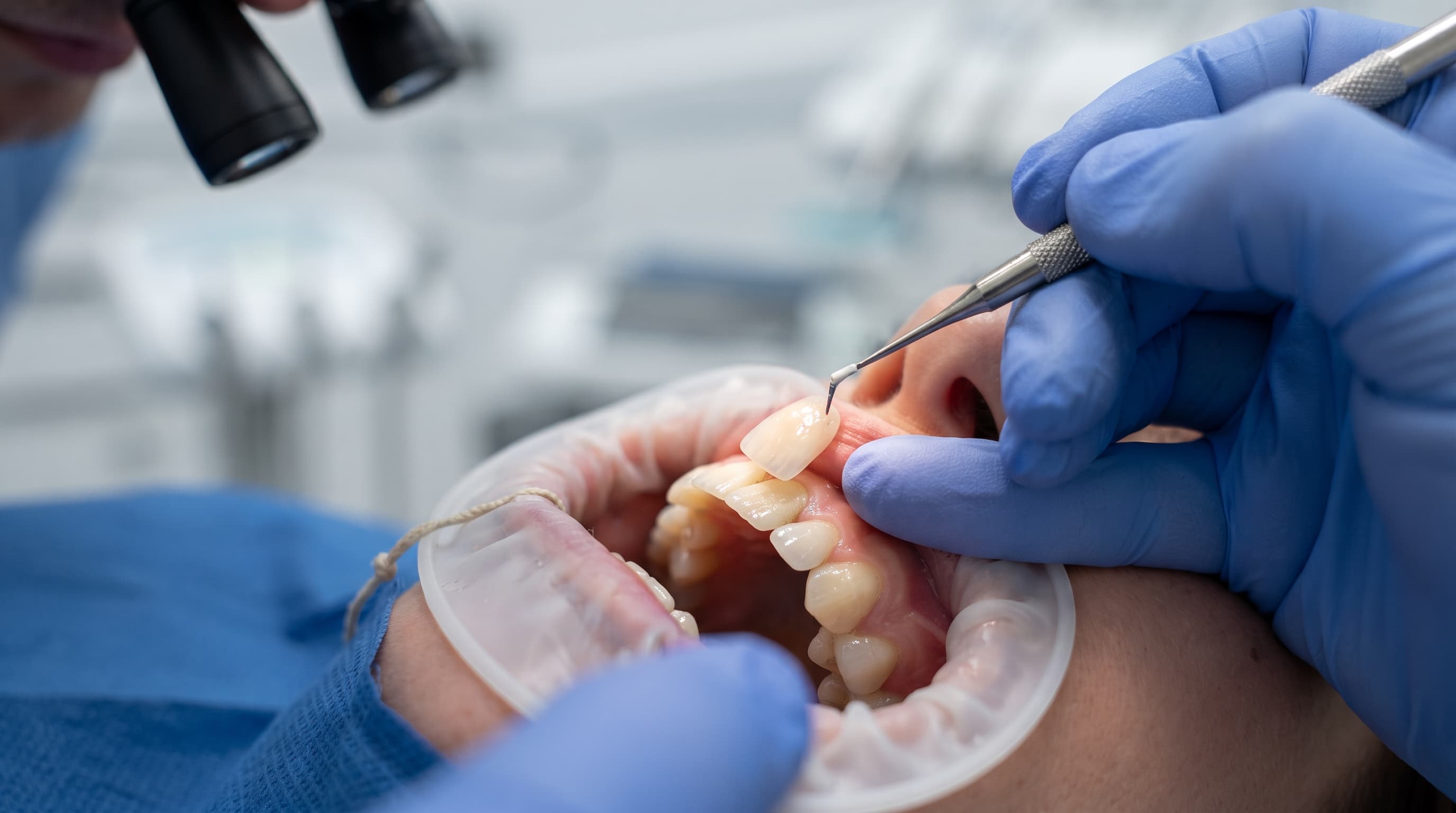
Gum recession creeps up. Most people only notice it when a front tooth starts to look a little longer in photos, or a sip of iced water suddenly stings. By then the gum has usually been pulling back for years. Lost gum does not grow back on its own, but recession can be stopped, and exposed roots can often be covered again.
What Is Gum Recession?
Gum recession is when the gum pulls back from a tooth and exposes part of the root. Roots are not covered by enamel, so they are more sensitive and more prone to decay and wear.
Why Gums Pull Back
- Gum disease, which destroys the gum and bone that support the teeth
- Brushing too hard or with a hard-bristled brush
- Thin gum tissue, which some people are born with
- Clenching or grinding the teeth
- Tooth position, including teeth that sit outside the arch or have been moved by orthodontics
- Tobacco use
Warning Signs
- Teeth that look longer, or a visible notch near the gumline
- Sensitivity to cold, sweets, or brushing
- Gums that bleed, look red, or feel tender
- Teeth that feel loose
What You Can Do at Home
Use a soft toothbrush with gentle pressure, and clean between your teeth every day. A toothpaste for sensitive teeth can help with discomfort. These steps help prevent further recession, but they do not bring lost gum back. If the gums are bleeding or recession is getting worse, have them examined.
How Recession Is Treated
Treatment starts with the cause. If gum disease is present, it is treated first with gum disease treatment. If brushing habits or grinding play a role, those are addressed too, for example with a night guard.
When the root is exposed, the gum is thin, or recession keeps progressing, a gum graft can cover the root and thicken the tissue. The most widely used technique is the connective-tissue graft, in which a small piece of tissue, usually from the roof of the mouth, is placed under the gum around the tooth. Donor tissue is another option for some patients. The procedure is done with local anesthesia, and healing takes a few weeks.
Not Every Receding Gum Needs Surgery
Plenty of mild recession just needs watching and gentler brushing. Gum grafting is a periodontist's specialty, and part of that expertise is knowing when not to operate. A periodontist measures the recession and follows it over time, so you know whether a graft would help now or whether keeping an eye on it is enough. Read more about gum grafting and our periodontal care.
If you have noticed a tooth looking longer or a new spot of sensitivity, mention it when you call (310) 731-6119 or book online. Our Wilshire Boulevard office welcomes patients from Miracle Mile, Hancock Park, and across Los Angeles.