
Dental Services · 3 min read
Implant-Supported Dentures vs. Traditional Dentures: How They Compare
November 13, 2026
Written by the Mid-Wilshire Dental Care team
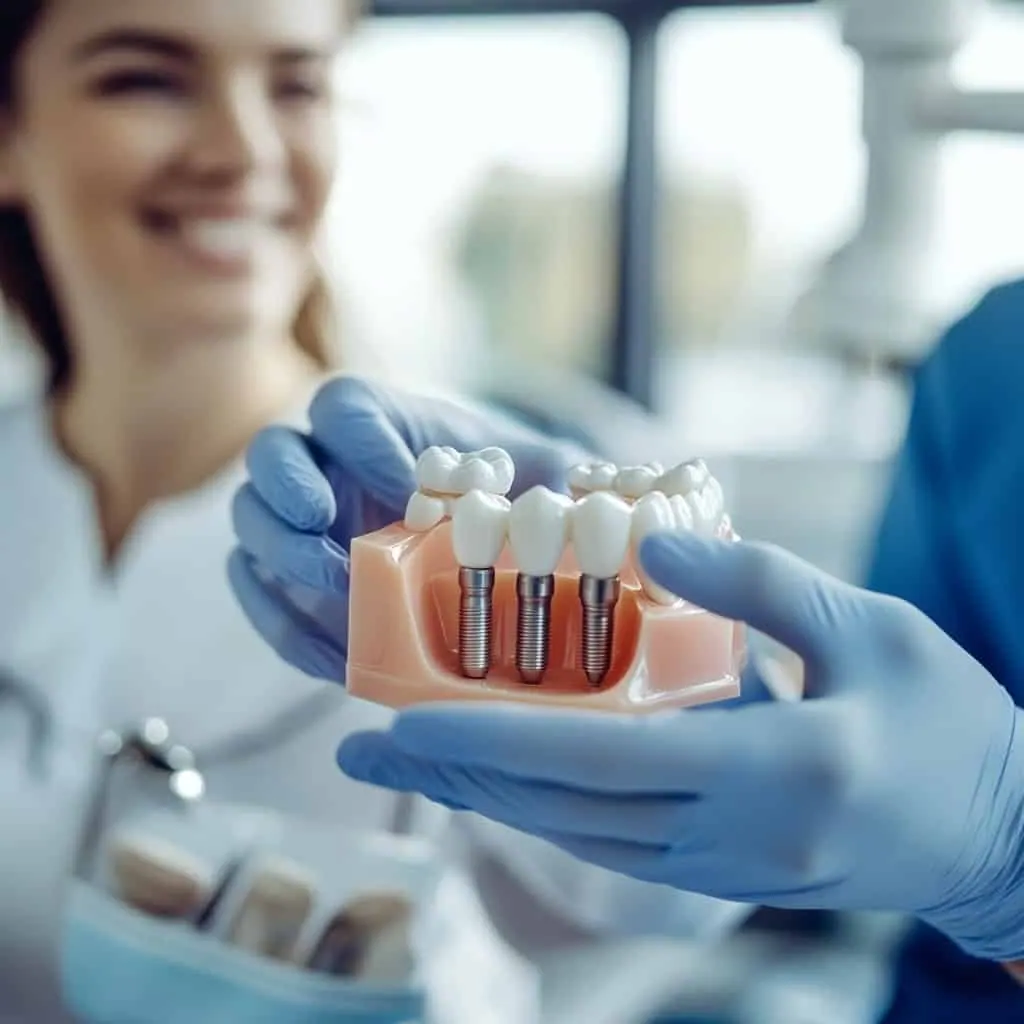
Ask anyone who has worn a lower denture for a few years and you will hear the same complaints: it moves when they talk, food gets under it, and steak is off the menu. Implant-supported dentures are one answer to those problems. They are not the right answer for everyone, though, and a traditional denture still makes sense in plenty of cases.
How Traditional Dentures Work
A traditional full denture rests on the gums. An upper denture is held partly by suction against the palate; a lower denture sits on a narrow ridge of gum and is often harder to keep in place. Dentures are removable, require no surgery, and usually cost less up front.
Their main drawbacks: they can move while eating or speaking, they cover the palate (which can affect taste), and the jawbone underneath keeps shrinking over time, so dentures need relining or remaking as the fit changes.
How Implant-Supported Dentures Work
An implant-supported denture is attached to dental implants placed in the jaw. There are two main types:
- Snap-on (removable) dentures. The denture clips onto two or more implants. It stays firmly in place while you eat and talk, and you take it out to clean it.
- Fixed full-arch teeth. A bridge is fixed onto several implants and does not come out at home. All-on-4 is one well-known approach.
How They Compare in Daily Life
The biggest difference people notice is stability. An implant denture stays put when you speak, laugh, or bite into an apple, and most people chew more comfortably and with more force. Implants also help preserve the bone they sit in, which a traditional denture cannot do, and an upper implant denture can often leave the palate uncovered, so food tastes more like it used to.
The trade-offs are on the other side of the ledger: implants mean surgery and months of healing, and they cost more at the start. Traditional dentures are quicker and cheaper up front, but tend to need relining and remaking more often as the bone changes.
Who Is a Good Candidate?
Implants need healthy gums and enough bone. Many people who have worn dentures for years have lost bone, which can often be rebuilt with a bone graft. General health matters too: smoking and poorly controlled diabetes affect healing. A traditional denture can still be the right choice when surgery is not advisable or not wanted.
Caring for Each Type
Traditional and snap-on dentures are taken out to clean every day. Fixed implant teeth are cleaned in the mouth, around and under the bridge, with special brushes or a water flosser. With implants, regular professional cleanings and check-ups are essential to keep the gums and bone around them healthy.
Compare Your Options
We make full, partial, and implant-supported dentures, and Dr. Bijan Afar, a periodontist and oral implantologist, plans the implant side. If you already wear a denture, bring it to the consultation; how it fits tells us a lot. For a broader look at the choices, see implant, bridge, or denture, or call (310) 731-6119 to set up a visit.
Which option fits you depends on your exam, imaging, and overall health.